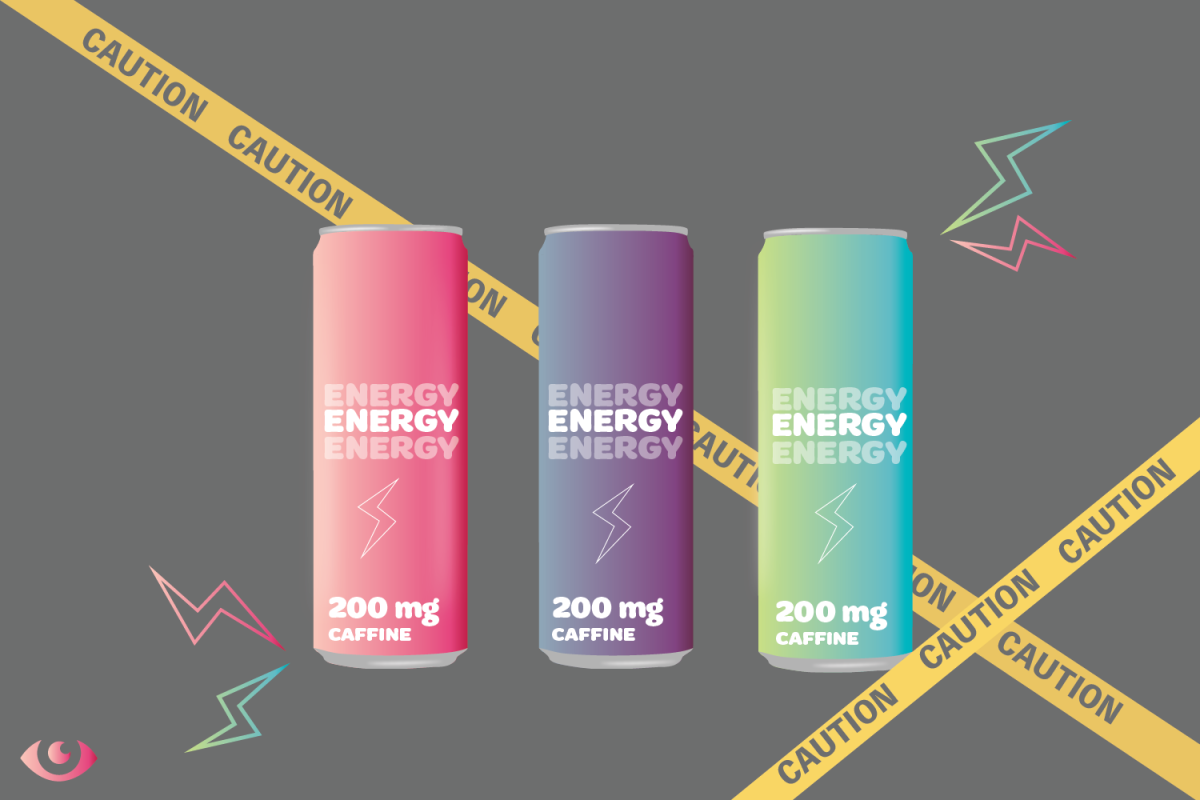
Energy drinks are a fairly new development with the introduction of Lipovitan, widely considered the first modern energy drink, being released in 1962. Since then, energy drink consumption has been steadily increasing. This includes children and adolescents, many of whom supplement energy drinks for other forms of caffeine, like soda. The U.S. Centers For Disease Control and Prevention (CDC) found that 30% to 50% of adolescents and young adults reported consuming energy drinks. Their popularity can be in part attributed to their promotion on social media, and the colorful, aesthetically pleasing marketing of brands like Alani Nu. Alani offers flavors like cotton candy and blue slush that are especially appealing to young people. This colorful packaging can attract shoppers and draw them into buying the product.
Consequently, there has been a rise in concerns for parents about the effects of caffeine on young people and the safety of energy drinks. Many teens over the past few years have increasingly started drinking energy drinks to boost their energy levels, concentration or athletic performance.
These concerns have magnified with recent teen deaths attributed to caffeine overconsumption, inciting some to become more conscientious of their caffeine intake. Aryden Brewer (11, HSU) previously drank around five Alanis a week before cutting back to three.
“I saw a TikTok where a girl had passed away from drinking too many. I was like, let me stop,” Brewer said.
Many highschoolers, including Brewer, start drinking energy drinks during their freshman year to combat the exhaustion and keep up with the rigor of high school.
“I would fall asleep by second period, and then I would have to pull the drink out,” Brewer said.
Alani is one of the most popular energy drinks with highschoolers and contains around 200 milligrams (mg) of caffeine per can. Bloom energy is also a popular option with a similar caffeine content of 180mg. Brands like Bloom and Alani market themselves as nutritional drinks. Alani describes their drinks as a supplement, claiming they can help people balance their hormones. Bloom describes their energy drinks as having, “natural caffeine, and good-for-you ingredients like prebiotics and lychee.”
But these energy drinks can be potentially harmful to the people who consume them. The Mayo Clinic says that up to 400 mg of caffeine may be safe for most adults while the FDA says teens should be limited to 100 mg. But people are consuming more than the recommended limit, even at the pediatric level. America’s Poison Centers have seen an increase in the amount of pediatric exposure to energy drinks, some even in young children.
“From 2022 to 2023, there was a 24.2% increase in such calls for children and teens under 20 years old. Children 6 to 12 years old experienced the largest proportional increase in energy drink cases, rising from 11% of pediatric energy drink cases in 2020 to 20% in 2023,” America’s Poison Control said on their website.
The reason for these exposures were 78% unintentional and 15% purposefully consuming energy drinks, meaning for the majority of cases children were unaware of how much caffeine they were consuming.
Due to their developing brains and smaller body sizes, adolescents are more susceptible to the effects and risk of caffeine ingestion. Adolescents who consume caffeine can have difficulty sleeping and can develop behavioral or mental health issues.
John Kim, a pediatrician with Norton Healthcare Children’s Medical Group, discussed the adverse health effects of caffeine intake. Consuming energy drinks can make the consumer more agitated and “revved up.” It can also make them more shaky and make their heart beat faster.
“Manufacturers will put in lots of sugar. And the problem, of course, with increased sugar intake is it can definitely heighten that feeling of being revved up, which is kind of its purpose. But afterwards, you have a much faster crash … typically an hour, an hour and a half later, you’re going to actually feel a little worse,” Kim said.
The American Heart Association recommends that the average male should consume no more than nine teaspoons (36 grams or 150 calories) of added sugar per day, and the average female should consume no more than six teaspoons (25 grams or 100 calories) per day. Rockstar drinks have 63 to 64 grams of sugar for 16 ounces, and Monster Energy has 54 grams for 16 ounces. This is almost double or over double the recommended amount. Having too much sugar can lead to higher risks of heart disease and stroke.
Given energy drinks’ appeal to young people and their potential excessive caffeine and sugar, Kim affirms that energy drink consumption in adolescents is a problem.
“It’s something that definitely has just an allure of how we can get an edge in our life, whether it’s in the classroom or on athletic fields. So I definitely think that it is an issue,” Kim said.
He adds that their enticing marketing can be deceptive for young people.
“It’s often something that people don’t consider as bad. Because honestly, it’s marketed really effectively as a, ‘hey, this is how you can boost your potential,’ Kim said.
Challenging course loads and busy high school schedules may have an influence on teen’s caffeine dependencies. The expectations of a high school student, especially a Manual student, are high. Manual students endure early mornings, heavy courseloads, AP classes and after school obligations like sports, clubs and work. This can enhance the desire for a boost to make long days more tolerable.
Several Manual students that consume energy drinks say that the reason they drink them is to get an extra boost to deal with the hard workload of Manual.
Fahmeeda Mohammad (12, MST) stated that she drank more energy drinks when she was a junior due to the more intense workload.
“If I would have less work, I would sleep earlier,” Het Panchal (10, MST) said.
Nayef Alshawabkeh (12, HSU) drinks about two a day to compensate for a lack of sleep. He began drinking them during the second semester of his junior year to help him get through exams. Now that he is a senior, Alshawabkeh has a lighter workload and believes that if he didn’t have to wake up as early for school, he would rely less on energy drinks.
But other Manual students had adverse effects from consuming energy drinks.
At the beginning of March, Sophia Eng (12, MST) was stressed out due to having a lot of exams, so she decided to drink an energy drink. Eng doesn’t usually drink energy drinks, but due to her stress she decided to anyway. She drank it on an empty stomach, but, later on in the day, every time she tried to eat something, she threw up. Eng went to the doctor, and they told her she couldn’t have caffeine anymore.
For those worried about the negative impacts of caffeine, reducing or stopping consumption is feasible. But, Kim recommends that common users of energy drinks should not stop drinking energy drinks entirely to start out with.
“Typically, the recommendation is start reducing it by half of what you’re doing for a couple of weeks, and then reduce it further to a third for another couple of weeks, and then just trying to be off of it thereafter,” Kim said.
While energy drinks can aid mental and physical performance, after consistent increased consumption, it’s common for them to make people feel worse. Staying conscientious of caffeine intake and consuming it in moderation will help prevent the adverse effects of caffeine.