While many teeangers spend their after-school hours working in retail stores or fast food joints, some students take on a different job through Kicks Soccer Academy (KSA). Through KSA, multiple teeangers have been given the paid opportunity to work with young children across Louisville, helping them build confidence and teamwork skills while also developing their own leadership and communication skills.
Students from schools across Louisville are able to participate in the program. At Manual, Amara Sheis (10, HSU) and Ella Kaylor (11, HSU) both work at KSA coaching elementary school kids. At Ballard High School, junior Sanad Albakri also coaches the Islamic School of Louisville team through KSA. While each coach has a different background in soccer, all three said the experience has taught them skills that differ from many traditional teen jobs.
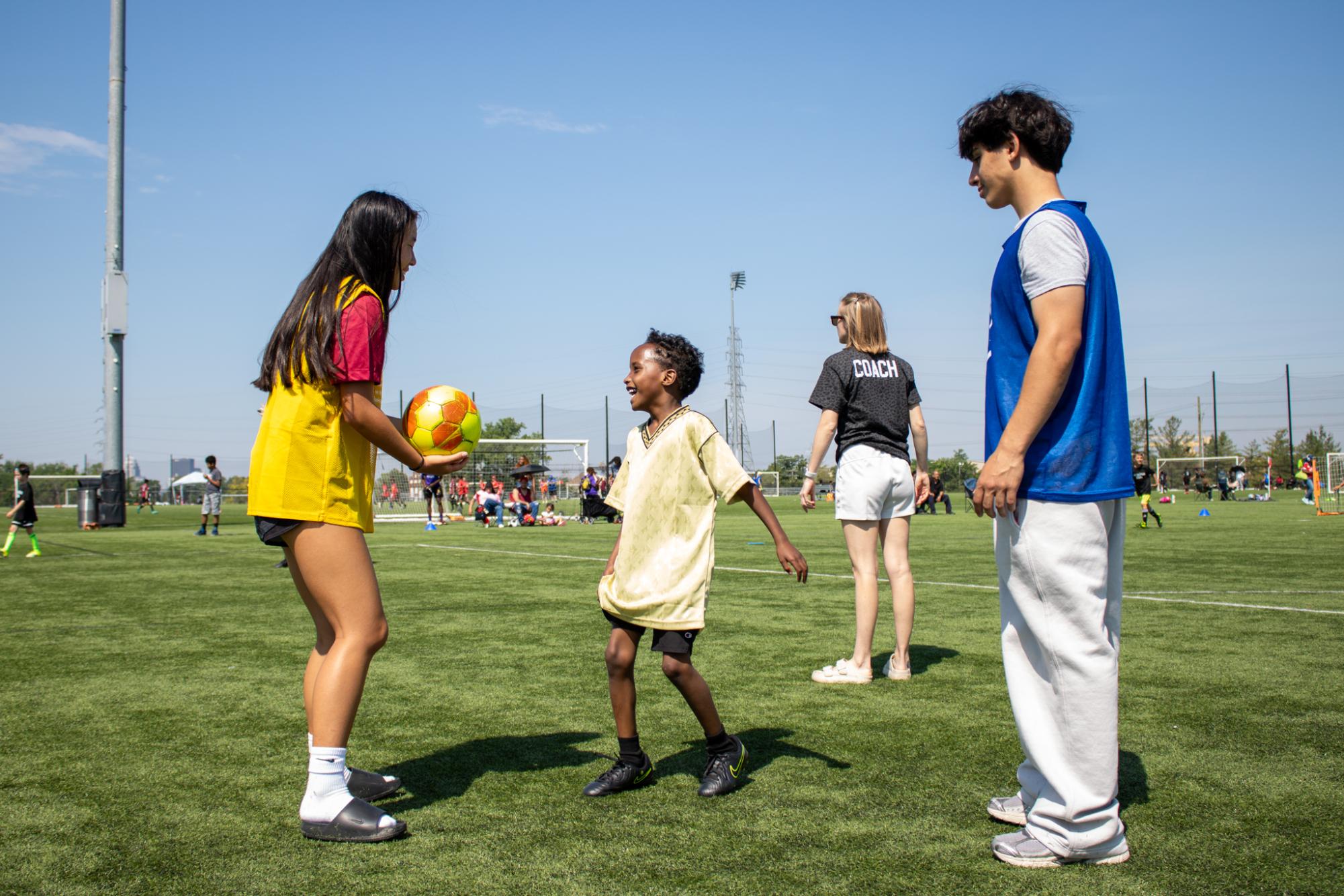
For many of the coaches working for KSA, the job involves much more than simply teaching soccer drills. Oftentimes, coaches are responsible for managing large groups of children, keeping students engaged during practices and helping younger players develop teamwork skills on the field.
“I help organize drills for them, and I basically just ensure they have good teamwork and communicate properly while they’re playing,” Sheis said.
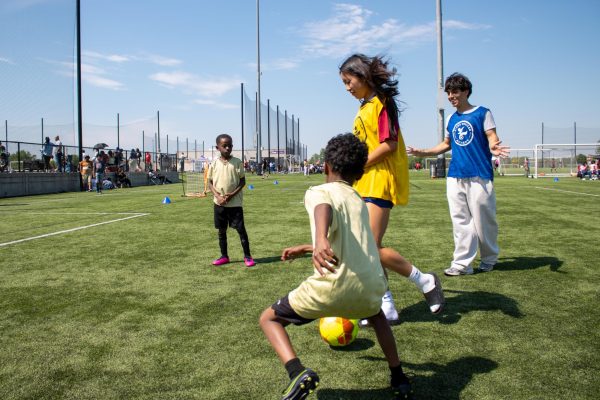
Unlike most soccer coaches, Sheis didn’t play soccer. She started working with KSA after her sister previously was a coach for the program. Despite not having much soccer experience, She is able to quickly connect with the students and had some experience through Lacrosse.
“It’s very rewarding seeing them score and getting more confident with the ball,” Sheis said.
Other than helping younger players improve their soccer skills, coaching also relies on being able to balance responsibilities outside of work. During the spring season, Sheis often went directly from school to coaching and then went home to finish her assignments from the classes she was taking.
“Because I do have my own soccer practices and games, AP classes, advanced classes, all of that, my parents limit me to three days a week,” Kaylor said.
Over the past three years, while coaching for KSA, Kaylor also mentioned that watching the kids grow more confident and learn to have fun with soccer throughout the season has become one of the most memorable parts of coaching.
“We just had our last game, and I brought them some popsicles,” Kaylor said. “We sat together as a team and watched some other soccer games, and that was pretty fun.”
Like Kaylor and Sheis, Albakri said coaching younger children requires more patience and responsibility than most people expect from a teenage job.
“People think it’s an easy job,” Albakri said. “But being able to deal with little kids, having the patience and knowing how to handle them, it’s definitely different from a regular teenage job.”
When coaching, especially when working with elementary-aged children, it requires constant communication and attention so they don’t get too distracted during practices.
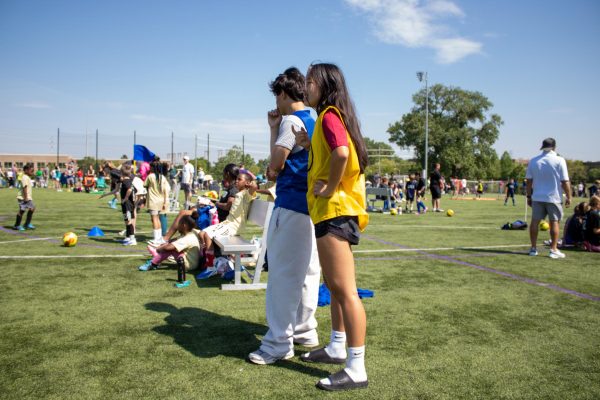
For Albakri, keeping younger children focused during practices is one of the biggest challenges he has faced as a coach.
“You can’t just let them do whatever because they’ll be all over the place,” Albakri said.
Although the job can sometimes be challenging, all three coaches agree that working with younger children is what helped them build communication, responsibility and leadership skills that they can use outside of soccer as well. Through KSA, the students aren’t only helping younger players improve on the field, but also creating a positive environment where kids have the opportunity to build confidence and learn to enjoy soccer.