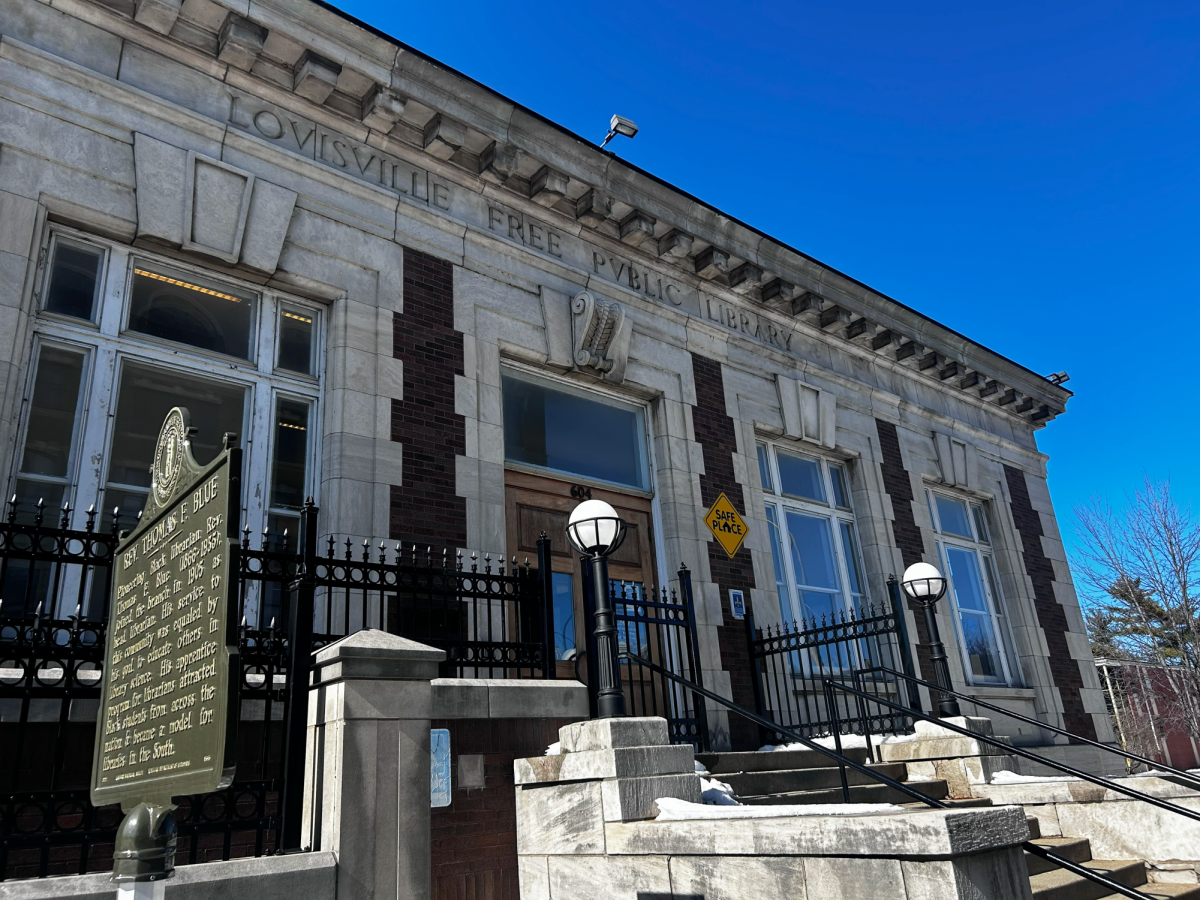
Established in 1905, the Louisville Western Branch Library’s opening marked a significant event in history, being the first free public library for African Americans with an entirely African American staff. After the Civil War, everything remained legally segregated in the South despite constitutional freedom for African Americans.
As the population of African American readers grew post-Civil War, people with power challenged the free public library legislation in Louisville. Albert Meyzeek was one of these people, as he grew concerned over the lack of materials while teaching at Central High School and petitioned that African Americans should have access to the library system.
When the Louisville Free Public Library opened in 1905, there were funds set aside to open a library solely for African American citizens. Andrew Carnegie pledged these funds to open the library.
The branch elected Reverend Thomas Fountain Blue as branch librarian. Blue developed an independent system dedicated to benefiting the lives of African Americans in Louisville and catering to their needs with a fully African American staff.
When it opened, the library did more than provide literature to the community. It was a place of learning and development with a specific focus on children. Young African American children could participate in a multitude of clubs surrounding reading and debate.
Other influential community figures pitched in to give the children a functional literary community. Joseph S. Cotter introduced the “Cotter Cup,” a children’s storytelling contest that included cash prizes for the winners. The competition still exists today after the Western Branch Library revived it.

When Blue passed in 1935, his assistant and successor Rachel D. Harris took over the branch, where she continued to devote resources and time to the children existing in the community.
Later, in 1952, the library was desegregated. In 1992, the library faced a lack of funds and underwent consideration for closure. However, protests and pushback from the community led to a $50,000 and a re-opening of a newly renovated library in 1994.
In 2001, the singer Prince donated 12,000 dollars to “assist in reaching all areas of the community.” This money was a beneficial contribution to the branch, and its effects permeated for years after the donation. Today, the check is framed in the African American Archives in the basement of the library building.
The library was renovated for half a million dollars in 2012, with the most prominent addition being the African American Archives Reading Room. The Archives house writings from Blue and manuscripts from both Cotter and Harris. The Archives also take community donations, including a collection of dolls depicting prominent African American figures and vintage records.
Today, the library serves as a fundamental piece of the community in Western Louisville. Children and adults alike use the library to access the internet for work and for play. The library offers educational opportunities and houses a “community board” filled with flyers and information about what’s happening in the community.
For many, the library provides resources they otherwise might not have access to. If not for the predecessors who fought for the library’s existence and funding, from Blue to Cotter, a historical center for community and education in Louisville would not exist.