The Rafah border, the only passage connecting the Gaza Strip to Egypt, was reopened on Feb. 2, 2026 for medical and humanitarian aid purposes for a limited amount of time. The border was reopened as a part of a United States brokered ceasefire agreement, once Israel confirmed that their last hostage was returned.
The Rafah border is located along Gaza’s southern border between Egypt and is Gaza’s only border not directly controlled by Israel. The border serves as a critical route for humanitarian aid, medical evacuation and travel.
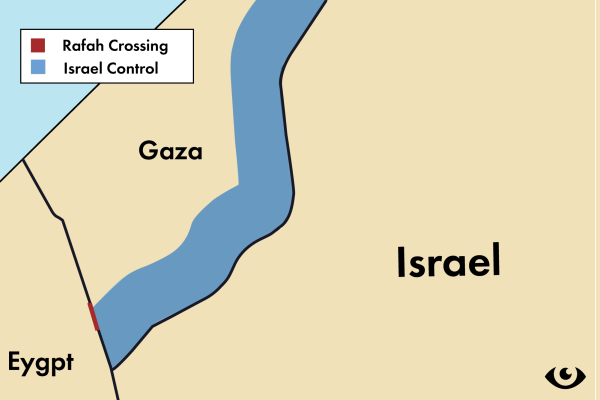
The border crossing was shut down on May 7, 2024, when Israeli forces seized control of Gaza during military operations, but the border has been closed since Oct. 2023. Since the Rafah border has been closed, Israel has maintained control over it, which has caused serious security concerns. Egyptian authorities have also closed their side of the border, sealing Gaza off from almost all civilian travel. Since then, thousands of Palestinians have been unable to leave for urgent care, and their wounds are left unattended.
The World Health Organization reported that nearly 42,000 people in the Gaza strip, as of Oct. 2025, are living with severe injuries that require immediate and long term attention. The reopening of the Rafah border allows a limited number of severely wounded patients to travel to Egypt for urgent care. Some displaced residents are also allowed to return home.
Control of the Rafah border has also shifted to a new, non-Hamas Palestinian committee. As a part of the ceasefire deal, they will be taking new steps to rebuilding the city by selecting a new Palestinian committee to govern Gaza and disassembling Hamas. The new committee is now managing daily operations that are in accordance with the terms of the ceasefire agreement. While this marks a step forward for Gazan citizens, the crossing still remains heavily regulated.
During the first few days of the reopening of the border, only 50 people will be allowed to cross both ways per day. A total of 150 Palestinian citizens will be allowed to leave Gaza through the crossing each day, but only 50 could enter.
For many Palestinians, the reopening of the Rafah border is a positive development, and while the doors to the border have been opened, there is still a humanitarian urgency inside Gaza. Although the crossing allows for some movement for medical and humanitarian aid, strict restrictions still remain in place, and access is still limited for most citizens.