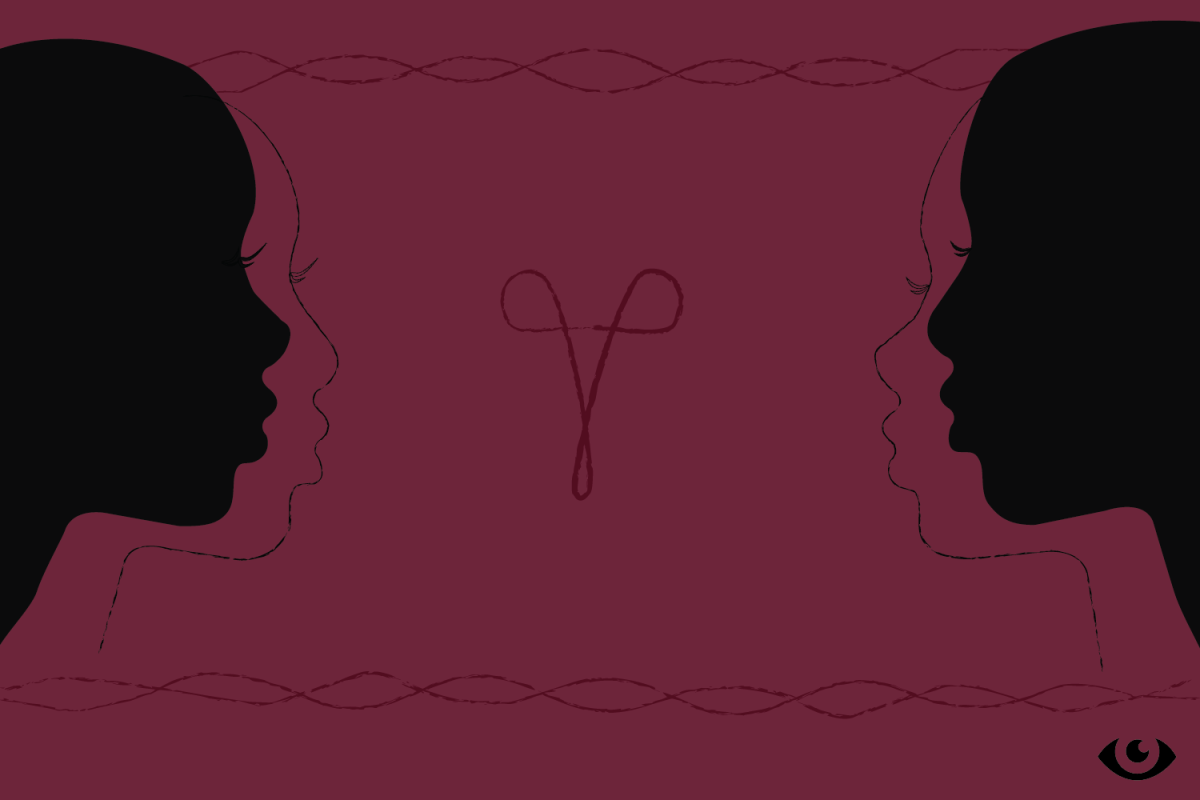
J. Marion Sims is often referred to as ‘the father of modern gynecology’ for his contributions to medicine. This includes the development of a surgery to cure Obstetric Fistula, an opening between a woman’s genital and urinary tract that causes a loss of bladder and bowel control as a result of a traumatic childbirth. However, this development would not be possible without the exploitation of numerous enslaved Black women, including Anarcha, Betsey and Lucy. These women endured a myriad of painful surgeries for Sims to eventually develop his surgical technique.
Common recognition of Anarcha, Betsey and Lucy is long overdue, and steps towards reparations haven’t been taken until recently. It wasn’t until 2021 that the American College of Obstetricians and Gynecologists (ACOG) formally acknowledged Anarcha, Betsey and Lucy, and began honoring them every Feb. 28 and March 1. In 2018, New York City removed a statue of J. Marion Sims from Central Park, and in 2021, Artist Michelle Browder opened the Mothers of Gynecology monument in Montgomery, Alabama. Despite these reparations, the story of Anarcha, Betsey and Lucy is far from common knowledge.
Anarcha, Betsey and Lucy were enslaved women from Montgomery, Ala., who had all developed Obstetric Fistula following their childbirths. Their slaveowners sought a solution to a condition that kept them from intensive labor and went to Sims for answers. He leased the women for a six-month period, where he had full control over their bodies to experiment on. The conditions of the countless surgeries were the same each time; the women were fully conscious, naked, restrained on the operating table and had an audience of white men.
During this time, it was a commonly held belief that people of color did not experience pain the same way that white people did, which, to doctors, excused a lack of sedation for the surgeries, even after anesthesia was invented. However, Sims described the experiments as “so painful that none but a woman could have borne them.”
As Sims’ experiments continued to fail, the women were left in his control because they had no value to their owners until they were cured. Over the next five years, Anarcha, Betsey and Lucy helped each other with their recoveries and Sims trained them to be his assistants. As he brought in more enslaved women to experiment on, the women became experienced practitioners. In 1849, Anarcha’s 30th surgery allowed Sims to refine his technique and cure her Obstetric Fistula; cures for Betsey and Lucy followed, and they were sent back to their slaveowners.
In his outline of the procedure, Sims never admitted to his cruelty. He maintained that he operated on willing white women with the help of white nurses, leaving the trauma of his enslaved victims to become forgotten history.
180 years later, 50,000 to 100,000 women experience Obstetric Fistula annually, and surgical repair is highly effective. Before 1849, Obstetric Fistula would have had debilitating effects on women’s capabilities and socially isolated them, but now most who receive the surgery go on to live normal lives. This would not be possible without Anarcha, Betsey, Lucy, and the other enslaved women Sims experimented on. The women never received proper justice, and it is imperative that their stories are remembered.