On Jan. 8, the Kentucky General Assembly proposed House Bill 253. The bill would prohibit the use of three-cueing to teach students how to read.
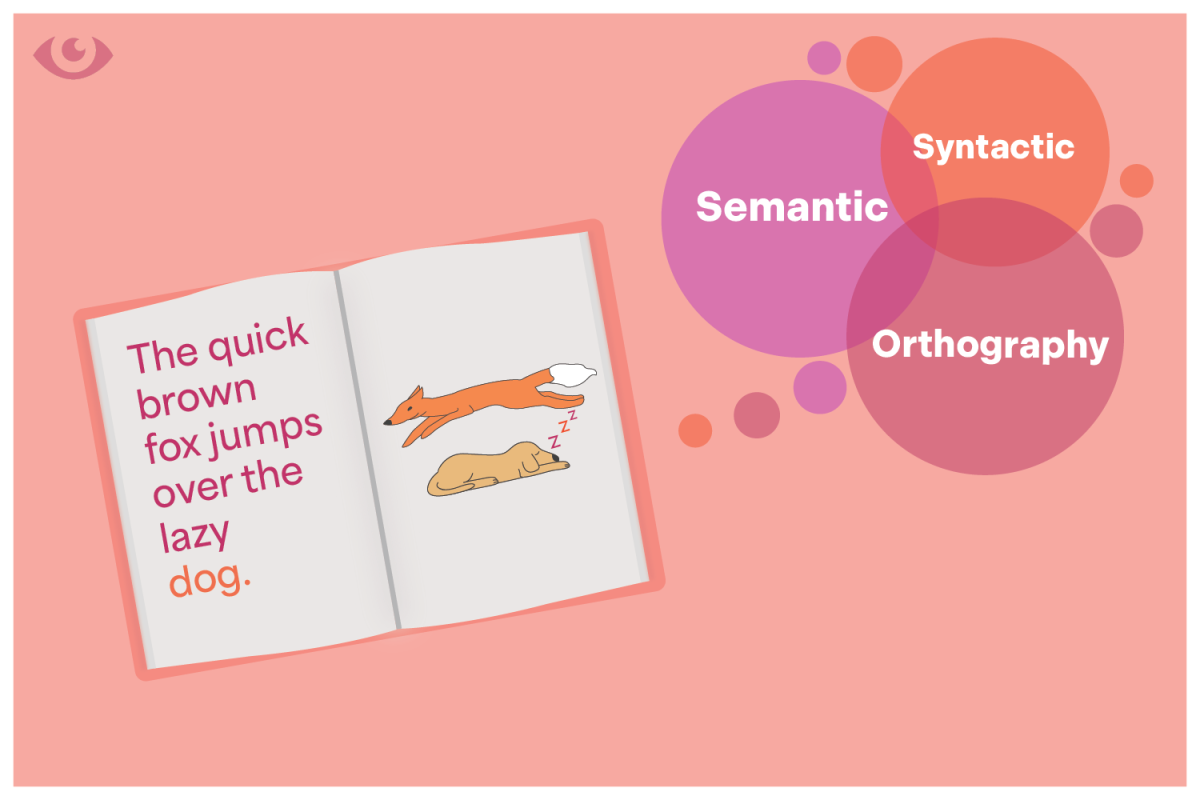
Three-cueing is a method of reading based around three different elements of a word: the semantics, the syntax and graphophonics. It requires students to first focus on those parts to help figure out a word before defaulting to using the phonics.
Three-cueing is based on theories from psychologists and linguists Ken Goodman and Frank Smith that were first published in the 1960s. The two concluded that readers rely on the actual print of a text as little as possible. Instead, the reader uses language cues, mainly semantics, syntax and graphophonics. Goodman and Smith’s theory also outlined that the reader was least likely to read with the help of graphophonics.
The issue with Goodman and Smith’s work is that the brain doesn’t rely on just one or two things to read. In a study in 2001, researchers found that the brain actually uses several different networks of systems to fully comprehend text. This means the three-cueing method isn’t fully successful in teaching students how to read because it doesn’t activate all systems needed for the brain to read.
Kentucky lawmakers cite this as a reason to prohibit three-cueing in schools as well as many other reasons. The document also states that three-cueing impacts future reading skills. In a study done by the National Institute for Direct Instruction, people taught with the three-cueing method could only demonstrate a basic understanding of words and struggle to fully understand more complex texts.
Eight states have already banned three-cueing, making Kentucky the ninth state if House Bill 253 is passed. As of right now, JCPS won’t be gravely affected because the county has already pulled away from the use of three-cueing in a decision made in 2023. JCPS uses a system referred to as the Expeditionary Learning (EL) curriculum for kindergarten through fifth grade. The system implements the use of both phonics and comprehension skills rather than rely on one or the other.
“Our foundational HQIR is EL and encompasses the foundational skill model the Science of Reading (SoR) is an evidence-based approach prioritizing explicit, systematic phonics instruction to decode words,” said JCPS Chief Communications Officer Carolyn Callahan.
JCPS also uses University of Florida Literacy Institute’s curriculums for the district’s middle school to help supplement students that may be struggling.
“In addition to the use of Skills Block as a component of EL that specifically addressed systematic phonics instruction, many schools up through middle school are using UFLI for interventions as children need,” Callahan said.
Within school buildings, teachers have used three-cueing within their classrooms.
”I did use the three-cueing system when I first started with JCPS in 2007,” kindergarten teacher Shannon Crutcher said.
Crutcher said later in her career she found three-cueing ineffective along with many of her colleagues.
”Most teachers seem to have realized that we have to use the Science of Reading and the components of the reading rope to truly teach all parts of reading. At least in the building I work in, most have veered away from focusing on three-cueing as the only method,” Crutcher said.
Crutcher does highlight how three-cueing may be used in the classroom.
“I believe three-cueing can only be used if combined with all the strategies of the reading rope. Some pieces of three cueing aren’t “bad,” but they have to be used within a system of teaching phonics, word attack skills, comprehension, fluency and vocabulary,” Crutcher said.
While three-cueing can be used within schools and can prove to be helpful to many students, the method alone isn’t helpful to all students.
“You cannot expect readers, especially struggling readers, to be able to look at the beginning sound, skip the word, use the picture (if there is one), or guess when it comes to reading. They have to be given the phonetic tools and “rules” to figure out words,” Crutcher said.
For teachers that may be currently using the three-cueing method to teach their students. There are many other ways at their disposal. JCPS is already using EL and UFLI, but there are also several other training methods.
Crutcher mentioned the Language Essentials for Teachers of Reading and Spelling (LETRS) program. It is meant to be able to apply to all parts of elementary school. LETRS is meant to encapsulate all parts vital to reading comprehension including phonics, fluency, vocabulary and comprehension.
”LETRS is a tremendous training. All elementary teachers should have to be effective reading teachers. I believe it should be a college course in learning how to teach reading for undergrads,” Crutcher said.