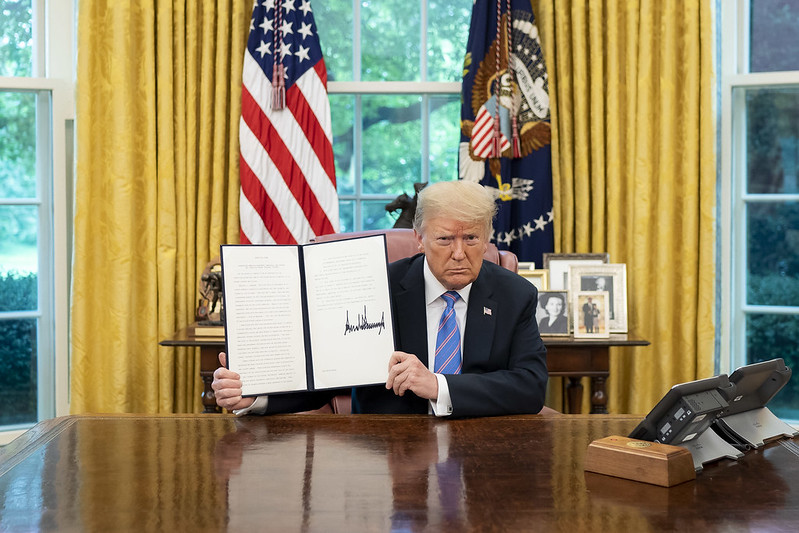

On Jan. 7, 2026, President Donald Trump announced through a presidential memorandum the U.S. will be withdrawing from international organizations, conventions and treaties “contrary to the interests of the United States,” according to the message. The U.S. will be leaving 66 organizations or bodies in total, 31 of which are associated with the United Nations. The organizations handle a variety of matters, from renewable energy to gender equality.
“As this list begins to demonstrate, what started as a pragmatic framework of international organizations for peace and cooperation has morphed into a sprawling architecture of global governance, often dominated by progressive ideology and detached from national interests,” said Secretary of State Marco Rubio in a statement.
The process leading up to the withdrawal officially began Feb. 4, 2025, when Trump issued Executive Order 14199. This order enlisted Rubio, with input from the United States Representative to the United Nations Mike Waltz, to orchestrate an analysis of every intergovernmental international organization the U.S. is a member of or supports, as well as any treaties or conventions the U.S. is involved in.
Several politicians and scientists are speaking out against the withdrawal, referencing the significance of U.S. involvement in combating climate change and preserving the environment.
“Withdrawing from these international clean energy and environmental programs will be remembered as one of the greatest acts of economic self-sabotage in American history,” said House Natural Resources Committee Ranking Member Jared Huffman in a statement.
“Withdrawal from the global climate convention will only serve to further isolate the United States and diminish its standing in the world,” said a statement from policy director and lead economist for the Climate and Energy Program at the Union of Concerned Scientists Rachel Cleetus.