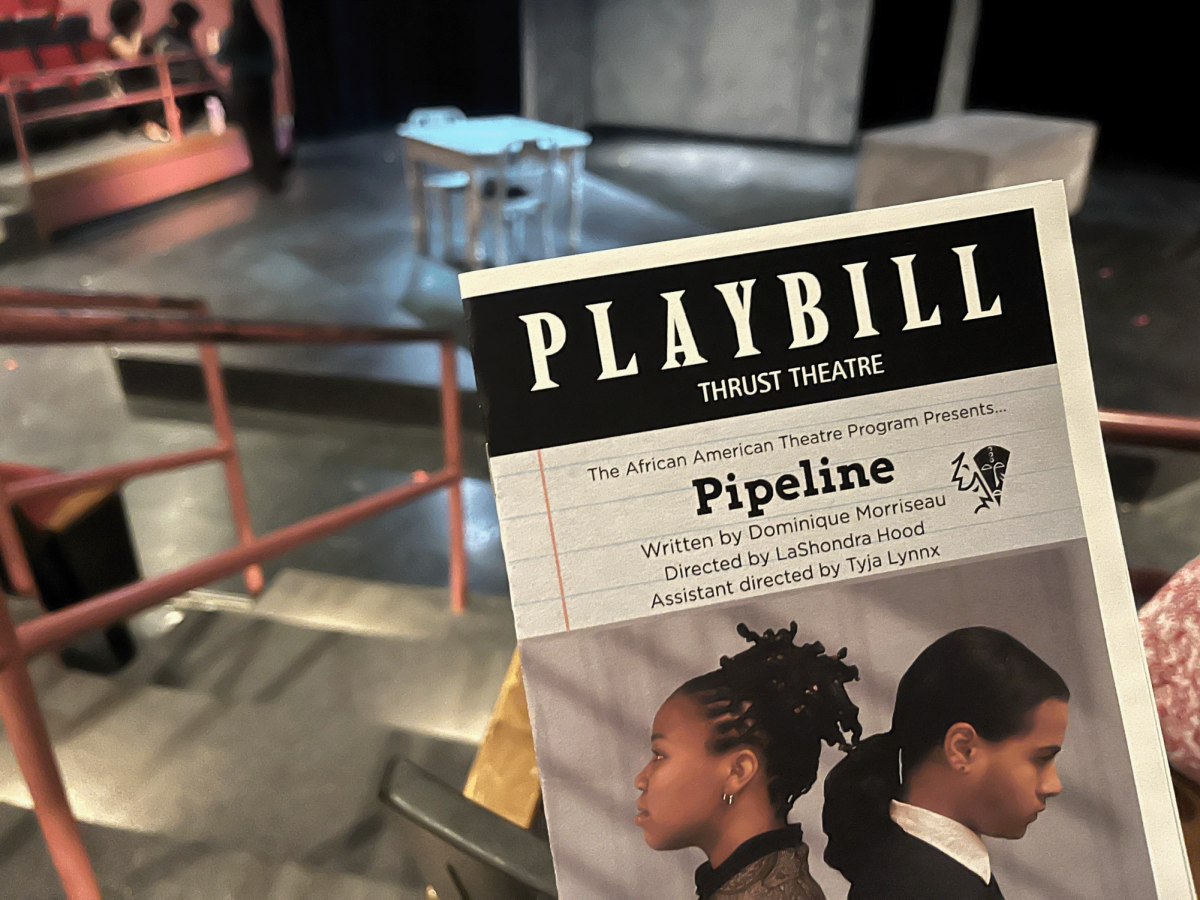
The play “Pipeline” promises something direct and clear-cut, especially when implicating America’s school-to-prison pipeline — the systemic forces that disproportionately channel primarily Black and brown students towards incarceration. Yet the connection between playwright Dominique Morisseau’s intimate story and her broader social critique is sometimes lost amid abstract scenes and familial relationships.
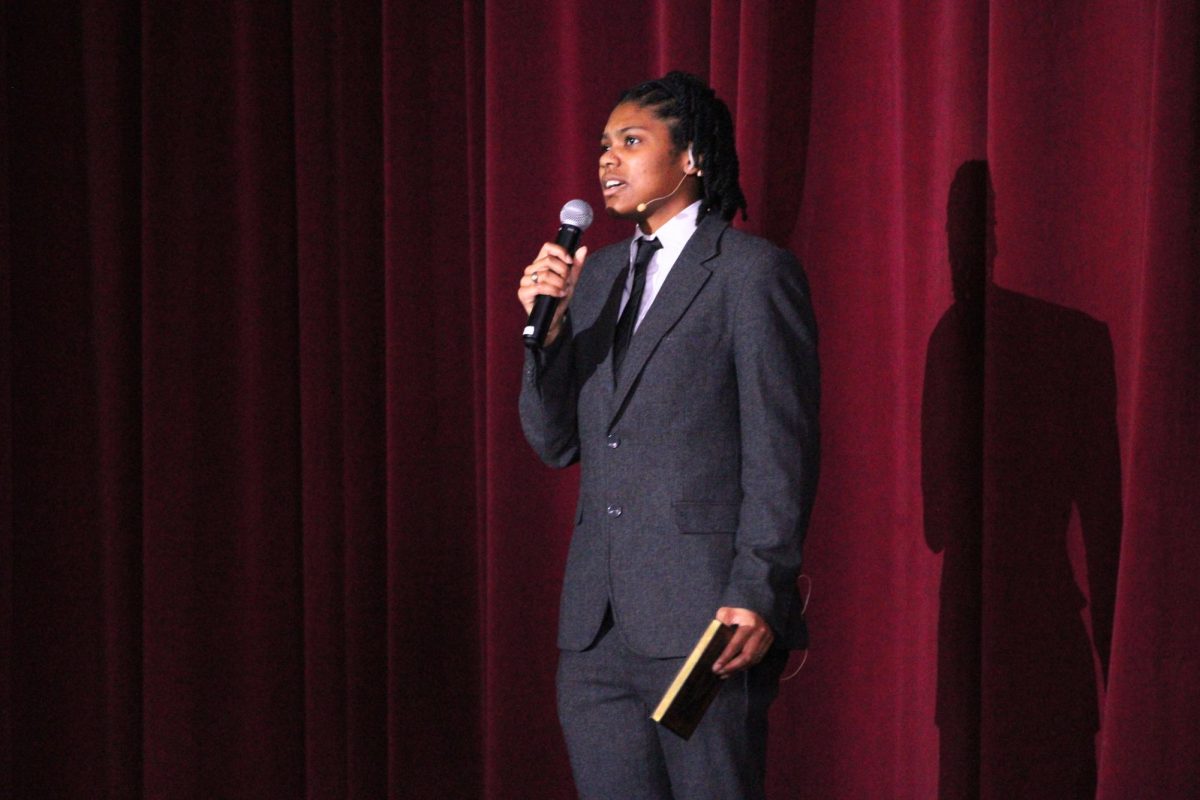
The University of Louisville’s African American Theatre Program brings “Pipeline” to life, centering on public school English teacher Nya (Aliyah Brutley/Razaria Denae) and her son, Omari (Giani Roberts/Jordyn Parker), who sparks the play’s tension by attacking a teacher. While the performances are compelling and emotionally charged, the play’s focus on one family sometimes obscures the systemic issues lying just below the surface.
However, some of the most powerful moments in “Pipeline” come from the monologues and the abstract sequences that immerse the audience in the characters’ emotional turmoil. Omari’s parents are separated and his father, Xavier (MichaelJoseph Barber/Wayne Taylor), pays for tuition to the private school Omari hates. During the climax of the play, Omari delivers a monologue about his disciplinary incident to his father. The emotional intensity and lyrical style leave the audience hanging onto his every word as he rehashes the moment he shoved his teacher into a Smart Board.
These moments, while compelling, can obscure the play’s broader message. The narrow focus on one incident and one family conceals the play’s larger social commentary behind that personal lens.
“Pipeline” gestures to systemic issues but leaves them subtle, filtered through Omari’s experience. He repeatedly tells his parents that his teacher was targeting him, asking pointed questions about Bigger Thomas, a Black character from Richard Wright’s novel “Native Son,” who accidentally murders a white woman.
“And he start sayin’, Mr. Joseph — what made Bigger Thomas do that to that girl? What were his social limitations? What made the animal in him explode? And he lookin’ at me. But also through me,” Omari said.
The assumption of violence is there, yet Morisseau’s script stops short of widening those moments into a broader examination of systemic bias. Omari’s girlfriend, Jasmine (Alaya Rhett/Jenny Reyes), mentions that the girls in her dorm assume that she is going to steal their stuff; however, this is still not elaboration on the societal issues at play. All of the tension tangles beneath the surface, just beyond the stage lights. That’s not to say that the understated aspects are accidental — Morisseau is a purposeful playwright, and her focus on these intimate, close relationships seems deliberate. The emotional experience is compelling, the actors’ talent breathing life into the script — but an audience member unaware of the school-to-prison pipeline would be hard-pressed to find a greater takeaway.
Perhaps Morisseau’s restraint is intentional. By narrowing her focus, “Pipeline” succeeds as an intimate portrait of a family in crisis. Whether that subtlety sharpens or softens the play’s message depends on how closely one is in tune with the realities of the school-to-prison pipeline. The University of Louisville’s African American Theatre Program brings urgency and vulnerability to Morisseau’s script, ensuring that the emotional weight of the play lingers long after the lights go down.